Case study
Free shipping threshold case study: showing shoppers how close they are to free shipping
This free shipping threshold case study tested one message on an eCommerce store's product pages: whether the shopper's cart already qualified for free shipping, or how much more it needed. On desktop, the rate of order completion rose 88.3% and revenue per visitor 175.4% at 95% confidence. Mobile showed no significant change.
Free shipping threshold case study at a glance
| Client | An eCommerce store shipping in the US (not named in the original case study) |
|---|---|
| Vertical | eCommerce |
| Page tested | Product pages |
| Change tested | A message under the price: the cart qualifies for free shipping, or the amount still needed to qualify |
| Test | A/B test, desktop and mobile analyzed separately; test length not published |
| Outcome | Rolled out on desktop; mobile to be researched further |
| Rate of order completion | +88.3% |
|---|---|
| Revenue per visitor | +175.4% |
| Mobile | No significant change |
Source: the original Convertica case study. The test length is not published, so these figures carry no timeframe.
What is a free shipping threshold?
A free shipping threshold is the minimum order value above which a store ships an order for free. Below the threshold, the shopper pays the normal shipping rate. Stores set one to make free shipping affordable and to give shoppers a reason to add one more item, which can lift the average order value.
A threshold only works if shoppers know about it, and know where they stand. That was the starting point for this test.
What problem was the test meant to solve?
The store offered free shipping above a threshold, but its product pages did not tell shoppers whether their cart qualified. A shopper deciding whether to buy, or whether to add another item, had to guess, or wait until the cart or checkout to find out what shipping would cost.
Unknown shipping costs are a common reason for hesitation in online shopping. Here the information existed, it just was not on the page where the decision was made.
What was the hypothesis?
The hypothesis was that telling shoppers, on the product page, whether their cart already qualified for free shipping, or exactly how much more they needed, would raise the rate of order completion and revenue per visitor. The test had three stated objectives: more completed orders, more revenue per visitor, and a comparison of the effect on desktop and on mobile.
What changed on the product page?
The variation added one message to the product pages, directly under the price and above the product options and the Add to Cart button. It had two states, depending on the shopper's cart:
- Qualifies: the cart already contains enough to qualify for free US shipping, and the message says so.
- Not yet: the message shows the additional amount the shopper needs to add to qualify for free US shipping.
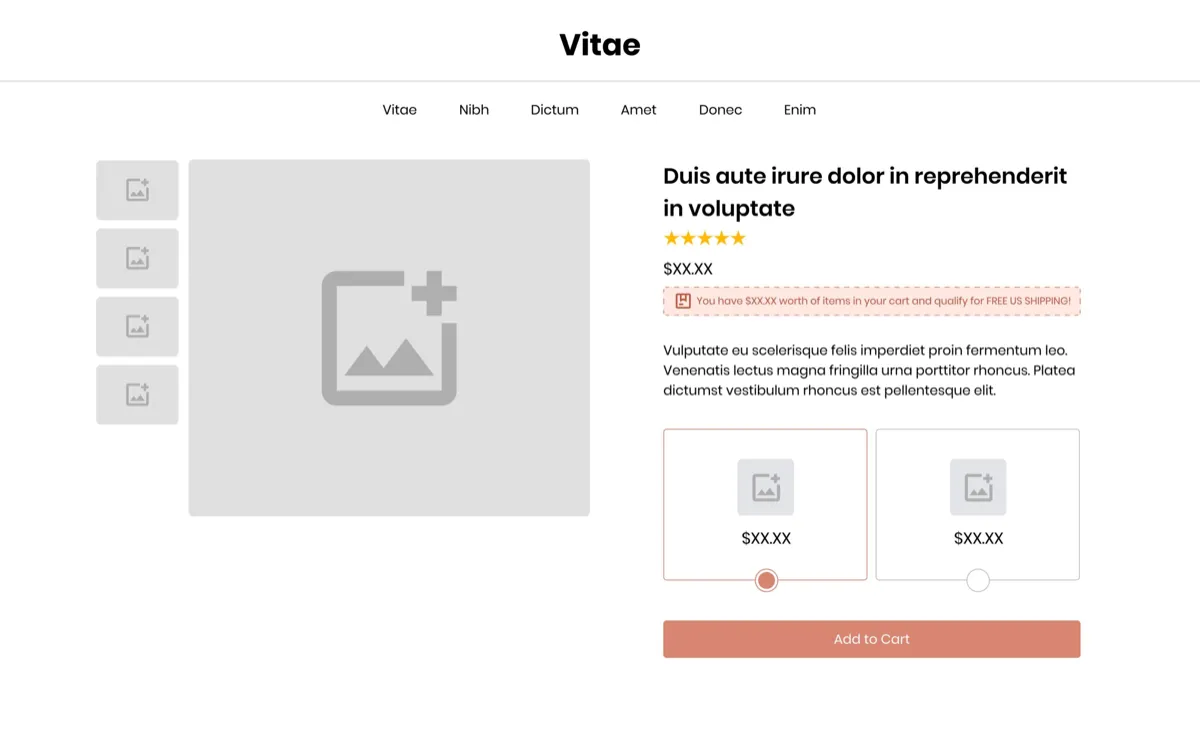
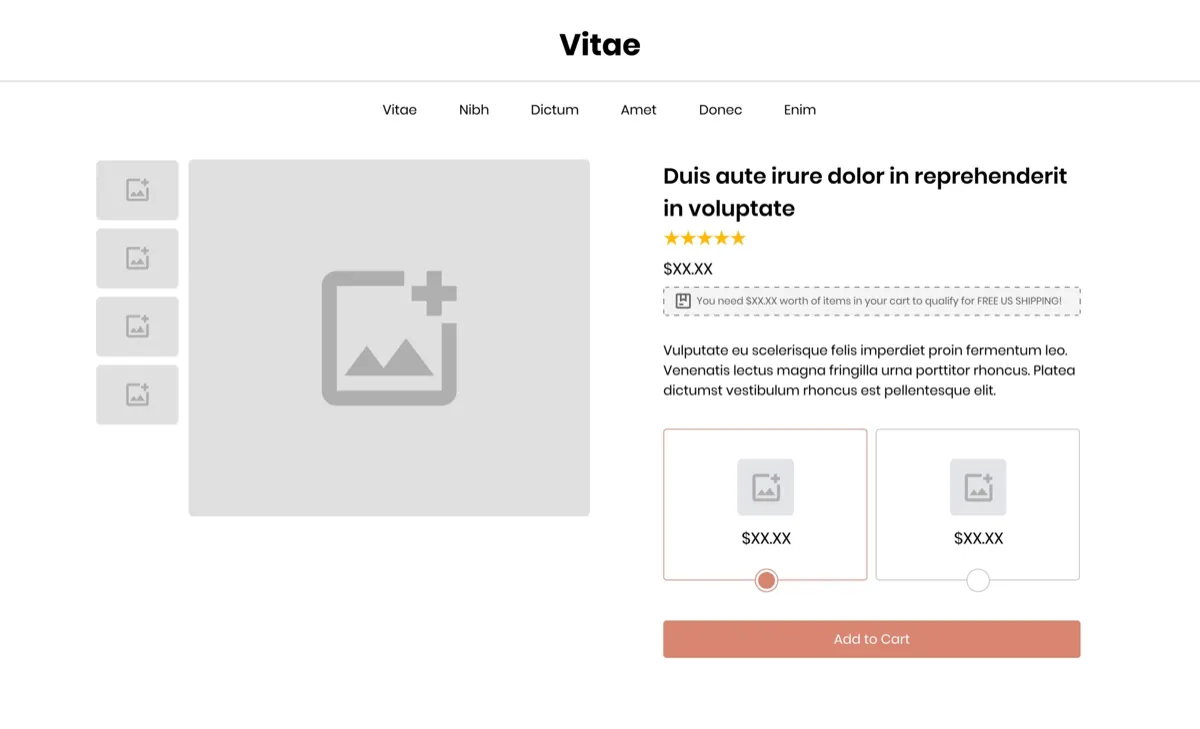
How was the free shipping message tested?
The variation with the free shipping message was tested against the original product pages. The team analyzed the results through reports on conversion rate, revenue per visitor and performance at each step of the funnel, and reported desktop and mobile separately. The original case study does not state how long the test ran.
| Device | Rate of order completion | Revenue per visitor | Confidence | Decision |
|---|---|---|---|---|
| Desktop | +88.3% | +175.4% | 95% | Rolled out |
| Mobile | No significant change | No significant change | Not significant | Further research |
| All traffic, if rolled out on desktop only (estimate) | +27.1% | +69.2% | Not stated | Not applicable |
What were the results?
On desktop, the free shipping threshold message raised the rate of order completion by 88.3% and revenue per visitor by 175.4%, at a 95% confidence level. On mobile, neither metric changed significantly. Convertica recommended putting the change live on desktop and researching mobile separately.
The original case study also gives an "overall impact" figure: a 27.1% increase in the rate of order completion and a 69.2% increase in revenue per visitor if the change ran on desktop only. This page reads those as an estimate of the effect across all traffic, with mobile left as it was, not as a separate measured result.
Why did revenue per visitor rise more than orders?
Revenue per visitor is the conversion rate multiplied by the average revenue per order. On desktop, revenue per visitor rose 175.4% while the rate of order completion rose 88.3%, so the arithmetic implies that the average desktop order was larger too (2.754 divided by 1.883 is about 1.46). That fits the mechanism: a message that says how much more to add for free shipping invites shoppers to add it. The original case study does not report average order value directly, so treat this as an inference.
Why did the message work on desktop but not on mobile?
The original case study does not explain it and suggests further research into mobile behavior. One plausible factor is attention: on a desktop product page, a message beside the price is seen at the same moment as the price and the buy button, while on a phone, space is tight and shoppers often scroll past small notices. Behavior and expectations also differ between devices. The honest answer is that the reason is unknown, and a mobile-specific design deserves its own test.
How to show your free shipping threshold
If your store has a free shipping threshold, show shoppers where they stand on the product page, not only in the cart. Keep the message short, make the amount exact and keep it true as the cart changes. Then test it, by device, against your current page. A free shipping threshold is one of the classic pricing psychology tactics, alongside anchoring and the middle option.
- Put it next to the price. That is where shoppers weigh the cost. In this test, the message sat directly under the price.
- Show the exact amount still needed. A specific figure, calculated from the shopper's own cart, is easier to act on than a general "free shipping over" notice.
- Confirm when the cart qualifies. The second state of the message tells shoppers they have already earned free shipping, which removes a reason to wait.
- Keep it accurate everywhere. The threshold on the product page, in the cart and at checkout must match, including any regions it does not cover.
- Measure revenue per visitor as well as orders. A threshold can raise order value, which an order count alone will miss.
- Report desktop and mobile separately. Here the message helped one device and not the other.
The A/B test sample size calculator shows how much traffic a test like this needs, and the statistical significance calculator checks the result. For a related test on the same theme, read the free shipping badge case study, where a badge beside the price promoted free shipping on every order.
Can AI shopping agents see your free shipping threshold?
Only if it is written down in a form they can read. A message drawn by a cart script is easy for a person to see and easy for an agent to miss. State the threshold in plain text on the page and in your shipping policy, and if you sell through Google, submit it in your product feed: Google Merchant Center has a dedicated free_shipping_threshold attribute with a country and a price threshold. Agent readiness is one of the eight checks in Convertica's free CRO audit.
Free shipping threshold case study FAQ
What is a free shipping threshold?
A free shipping threshold is the minimum order value above which a store ships for free. Orders below it pay the normal shipping rate. Stores use a threshold to make free shipping affordable and to encourage shoppers to add one more item, which can raise the average order value.
Does showing the free shipping threshold on product pages increase sales?
In this test it did on desktop. A message telling shoppers whether their cart qualified for free shipping, or how much more they needed, lifted the desktop rate of order completion 88.3% and revenue per visitor 175.4% at 95% confidence. Mobile showed no significant change, so results depend on the device.
How long did the free shipping threshold test run?
The original case study does not state the test length. It reports the desktop result at a 95% confidence level, and no significant change on mobile. Because the duration is not published, this page reports the figures without a timeframe and treats them as one test on one store.
Why did revenue per visitor rise more than the order completion rate?
Revenue per visitor is the conversion rate multiplied by the average revenue per order. A larger rise in revenue per visitor (175.4%) than in order completion (88.3%) implies that desktop orders were also larger on average, which fits a message that tells shoppers how much more to add for free shipping. The case study does not report order value directly.
What do the 27.1% and 69.2% figures mean?
The original case study lists them under overall impact, as the increase in the rate of order completion (27.1%) and revenue per visitor (69.2%) if the change ran on desktop only. Read them as an estimate of the effect across all traffic, with mobile unchanged, not as a separate measured result.
Where should a free shipping threshold message go?
Put it where the buying decision happens. In this test it sat on the product page, directly under the price and above the product options and the Add to Cart button. Show the exact amount still needed, and update it as the cart changes, so the message is always true for that shopper.
Can Convertica run this kind of test on my store?
Convertica starts with the free CRO audit, an app that checks your page for people and for AI agents while you watch. After it, CRO advisory, led personally by founder Kurt Philip with Convertica's CRO team, then gives you ongoing direction on what to fix and what to test while your team builds the changes. Or, with full implementation, Convertica's team builds the fixes from your audit. Both are priced after your audit.