Guide
Conversion rate optimization (CRO): what it is and how to do it
Conversion rate optimization (CRO) explained: what it is, how to calculate conversion rate, the six-step CRO process, research methods, testing and key terms.
CRO blog
Conversion rate optimization guides, checklists and case studies, written from Convertica's work with more than 2,000 clients since 2017. Method first, sources for every number, and real test results with their metric and timeframe.
The Convertica CRO blog is written for site owners and marketers who improve their own sites. It comes from Convertica's work with 2,000+ clients since 2017, and founder Kurt Philip, in SEO since the early 2000s, leads it with Convertica's CRO team. Three rules shape it:
The monthly CRO round-ups Convertica used to publish are retired, and their links now land here. The guides below replace them and are kept up to date instead.
New to CRO
The core conversion rate optimization guides, in the order most people need them.
Guide
Conversion rate optimization (CRO) explained: what it is, how to calculate conversion rate, the six-step CRO process, research methods, testing and key terms.
Guide
16 conversion rate optimization strategies, grouped by the problem they solve, plus how to build a CRO strategy, ideas by page type and real test results.
Guide
A printable CRO checklist with 150 yes or no checks across tracking, landing pages, product pages, checkout, forms, SaaS, mobile, speed and AI agent readiness.
Guide
A/B testing guide: what A/B testing is, how to run a test in eight steps, how to read the results, the mistakes to avoid and how to build a testing framework.
Guide
Landing page optimization explained: the 10 steps to optimize a landing page, best practices, why a page is not converting, and how to test changes.
Guide
37 conversion rate optimization statistics on checkout, page speed, landing pages, A/B testing and reviews, each linked to the original study with its year.
Browse by topic
Every guide, knowledge page and case study on the site, grouped by topic. New pages appear here as they are published.
What conversion rate optimization is, how the process works, and where to start.
A printable CRO checklist with 150 yes or no checks across tracking, landing pages, product pages, checkout, forms, SaaS, mobile, speed and AI agent readiness.

The best conversion rate optimization books by topic: CRO process, A/B testing, analytics, usability and persuasion, with checked authors and where to start.
More in this topic
Conversion rate optimization (CRO) explained: what it is, how to calculate conversion rate, the six-step CRO process, research methods, testing and key terms.
16 conversion rate optimization strategies, grouped by the problem they solve, plus how to build a CRO strategy, ideas by page type and real test results.
37 conversion rate optimization statistics on checkout, page speed, landing pages, A/B testing and reviews, each linked to the original study with its year.
How to increase website conversion rate in 12 steps: fix tracking, find leaking pages, clarify the offer, cut friction and test. Plus engagement and sales.
Conversion rate optimization tools by job: analytics, heatmaps, A/B testing, surveys, user testing, forms, speed and landing pages, and how to build a stack.
SEO vs CRO explained: what each does, when to prioritize which, how SEO conversion optimization works, and how to A/B test without hurting rankings.
What micro conversions are, how they differ from macro conversions, examples by type of site, how to track them in GA4 and calculate a micro conversion rate.
How to plan, run and read tests, and the research tools that tell you what to test.

Heatmap tools compared: Microsoft Clarity, Hotjar, Crazy Egg, Mouseflow and more, by heatmap types and free plans, plus how to read a website heatmap.
More in this topic
A/B testing guide: what A/B testing is, how to run a test in eight steps, how to read the results, the mistakes to avoid and how to build a testing framework.
A/B testing examples with real results: Convertica case studies, two famous published tests, landing page test ideas and hypotheses you can copy.
How long to run an A/B test: calculate the sample size, divide by daily traffic, round up to whole weeks. Worked example, duration table and when to stop.
A/B testing tools compared from vendor sites: web testing and product platforms, free and open source options, statistics, what replaced Google Optimize, and how to choose.
Optimizely alternatives and competitors for web testing and product experimentation, compared feature by feature from each vendor's own site, plus free options and how to switch.
Pages that make the next step obvious: structure, copy, calls to action and pricing pages.
Conversion focused web design: 9 principles, page layouts that convert, how to redesign without losing sales, and a checklist for people and AI agents.
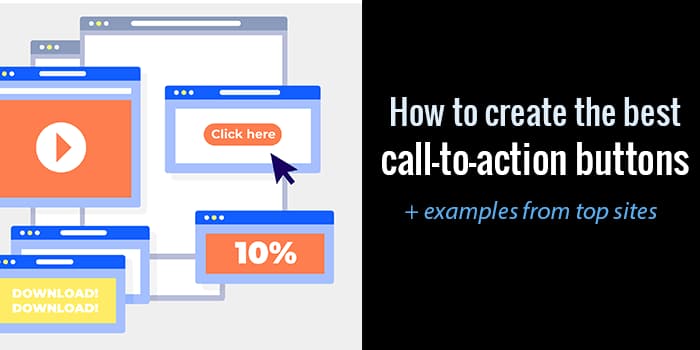
Call to action buttons that get clicked: what to write, which color to use, where to place them, plus CTA phrases, examples and a test plan from Convertica.

Pricing page design that converts: how many plans, plan order, a recommended plan, comparison tables, price display, trust and what to test, with a checklist.
Cognitive load is the mental effort a page asks of visitors. What it is, why it costs conversions, and 10 ways to reduce cognitive load, with a checklist.
More in this topic
Landing page optimization explained: the 10 steps to optimize a landing page, best practices, why a page is not converting, and how to test changes.
The anatomy of a landing page, part by part: headline, offer, proof, call to action, form and the details AI agents read, with a checklist.
Conversion copywriting explained: the research-first process, voice of customer methods, awareness stages, formulas, before and after rewrites and testing copy.
How to increase click through rate in Google search, paid ads, email and on your own pages: the levers that move CTR, a Search Console method and a test plan.
Where online stores lose buyers between the product page and the order confirmation.
Trust badges explained: the main types, which to use, where to place them, how to add them on Shopify and WordPress, and how to build trust online.
Ecommerce navigation best practices: categories, labels, menus, filters, search, breadcrumbs, mobile, SEO and AI agents, with a checklist.

Ecommerce homepage best practices for UX and conversions: what the page is for, what goes in the header, hero, body and footer, mobile, agents and testing.
More in this topic
Checkout optimization guide: why shoppers leave checkout, 12 ecommerce checkout best practices, how to measure checkout performance and how to test changes.
Shopping cart optimization: what a cart page needs, 10 ways to raise cart conversion rate, how to measure the cart and win back abandoned carts.
What cart abandonment rate is, the formula with a worked example, what the published average really measures, how to track it in GA4, and how to lower it.
Mobile conversion optimization in 12 steps: measure your mobile gap in GA4, design for thumbs, put what matters first, cut typing, speed up and test.
How to increase Shopify conversion rate: how Shopify measures it, how to find the leaking step, and 12 fixes for product pages, cart and checkout.
A Shopify store checklist for conversions: the 10 essential things to add to your store, where each lives in Shopify, and what to test before and after launch.
Fewer abandoned forms and more qualified leads.
Form abandonment explained: why people quit forms, how to measure form abandonment rate, 10 fixes, and how to build lead generation forms that convert.
Multi-step forms vs single-step forms: when splitting a form into steps lifts conversions, how to build one, examples by use case and an Empire Flippers result.
More in this topic
Login form design best practices: labels, autocomplete, NIST password rules, errors, recovery, passkeys, CAPTCHA alternatives, sign-up forms and a checklist.
The numbers behind conversion work, and how to read them.
Google Analytics conversion rate in GA4: key events, session and user key event rate, where to find it by channel and page, and ecommerce conversion rate.
More in this topic
Conversion funnel optimization in seven steps: map the stages, measure each one in GA4, find the biggest leak, learn why people leave, then fix or test it.
The ecommerce metrics worth tracking, with formulas and where to find them: traffic, funnel steps, conversion, average order value and revenue per visitor.
Why published average bounce rate figures mislead, how GA4 defines bounce rate, and how to find and read your own average bounce rate, page by page.
CRM best practices: the principles of customer relationship management, a six-step CRM strategy, 12 setup and data habits, and how CRM connects to conversion.
The behavioral principles behind many tests, with the evidence and the limits. Start with the scarcity marketing guide, the hub for this topic.
10 scarcity marketing examples from Gmail, Amazon, Nike, Starbucks, LEGO and more: the scarcity tactic each one uses, why it works, and how to copy it honestly.

The foot-in-the-door technique gets a bigger yes by asking a small one first. The 1966 experiment, why it works, online examples and ethical use.

The familiarity effect (mere exposure effect) makes people prefer what they have seen before. What the research shows, its limits, and 7 honest ways to use it.
Perceived value is what customers believe they get for what they give. The theory, real examples and 9 ways to raise perceived value on your website.
More in this topic
Scarcity marketing uses real limits on time, quantity or access to prompt action. The scarcity principle, research, urgency messaging and the ethical line.
The 7 principles of persuasion (reciprocity, commitment, social proof, authority, liking, scarcity, unity), the research and website examples.
Psychological pricing uses how people perceive prices: charm pricing, anchors, decoys and tiers. 9 strategies, the research behind each, and the legal line.
How AI shopping agents and AI search read your site, and what to change so they can use it.
Agentic commerce explained for site owners: how AI agents shop, the ACP, UCP and AP2 protocols, and what to change on your site so agents can read it and buy.
An AI agent readiness checklist for site owners: access, readable facts, structured data, usable checkout and measurement, with free ways to test your own site.
AI conversion rate optimization explained by a CRO consultant: where AI helps research, ideas and testing, where it misleads, and a safe way to use it.
llms.txt explained: what the file is, the format, a real example, how to create one step by step, and what Google, Lighthouse and AI tools actually do with it.
AI shopping assistant guide for store owners: when to add one, the risks, how to test it with a holdout group, and how outside AI assistants pick products.
AI ecommerce personalization for store owners: what to personalize, when it does not pay off, how to prove it with a holdout test, and what AI agents see.
AI A/B testing explained for site owners: where AI helps (ideas, variants, analysis), where it cannot replace traffic or judgment, and a 7-step workflow.
AI search engine optimization explained: what you control on your own site, how to optimize for AI search in 8 steps, what to ignore, and how to measure it.
Real Convertica tests, each with its metric and source, and its timeframe where the original write-up published one.
10Beasts case study: Amazon affiliate comparison table split tests and a pivot. Ad fees on the winning pages rose 66.3%, 20 March to 18 April.
Sticky CTA case study: a bottom-of-screen call-to-action bar lifted the mobile rate of order completion 252.9% in a 20-day test at 98% confidence.

Free shipping threshold case study: a product page message showing how close the cart is to free shipping lifted desktop revenue per visitor 175.4%.

Variant selector case study: labeled option panels and image swatches lifted a furniture store's conversion rate 144.8% in a three-week A/B test.

Mobile pricing table case study: a swipeable package slider raised a supplement store's mobile revenue per visitor 36% and order completion 43.9%.

SaaS CRO case study: two tests that raised free trial sign-ups, including a slide-in blog call to action (+50.27% on desktop). Test lengths not published.

Free shipping badge case study: a "Free Shipping Included" badge beside the price lifted desktop revenue per visitor 60.3% and order completion 27%.
Factory to Home case study: shipping, warranty and payment FAQs on the product page raised order completion 18.1% and revenue per visitor 12.7%.

Lead generation case study: a popup quote form beat an in-page form on a home services site, +45.08% successful bookings. Test length not published.
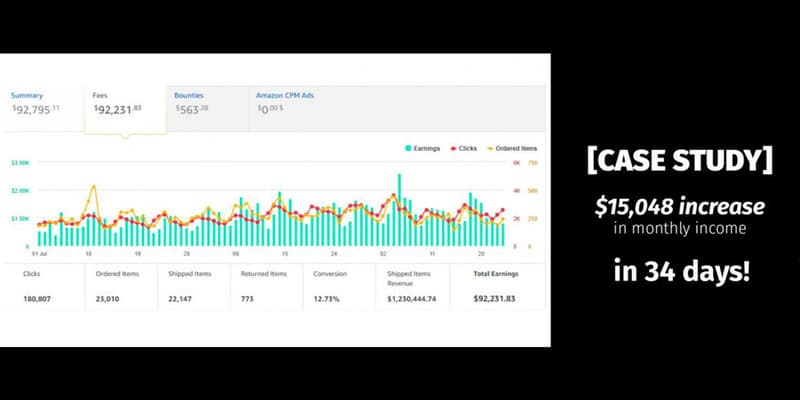
Affiliate case study: how heatmaps, buttons, comparison tables and split tests took a site's monthly revenue from $20,403 to $35,451 in August 2017.

Homepage trust signals case study: a shipping, reviews and secure checkout strip on a store's homepage lifted desktop revenue per visitor 57.9% in 12 days.

Ecommerce search bar case study: a visible search bar on a luxury goods store's pages raised the desktop order completion rate 71.9% at 98% confidence.

Product rating case study: a rating above each call to action and a sticky button back to the comparison table, split tested on an Amazon affiliate site.

Exit popup case study: an exit popup and a sticky footer call to action on an affiliate review site lifted clicks 29.6% across 10 pages in a 3-week test.

Comparison table case study: an Our Top 3 Picks table replaced an At a Glance list on an Amazon affiliate site: desktop sales per visitor +35.4% in 11 weeks.

Affiliate income case study, part 2: about 50 split tests in three months on one affiliate site, how the wins compounded and how to read test data.

Homewares CRO case study: sending shoppers straight to the cart after Add to Cart lifted a tableware store's mobile conversion rate 47.7% in a 19-day A/B test.
Reviews section case study: moving product reviews up to just below the product lifted a bedding store's mobile orders 42.38% in a 2-week A/B test.
Policy visibility case study: shipping and refund policy badges on a store's cart page raised the desktop order completion rate 21.8% at 97% confidence.
Assisted living website conversion optimization: calls to action after each property page section lifted form submissions 42.32%. Test length not published.

Product page redesign case study: a cleaner page with a sticky Add to Cart and Buy Now bar raised the desktop order completion rate 56% at 98% confidence.
dScryb case study: access-aware calls to action in a membership store's search results lifted paid membership sign-ups 49.4% in a 17-day A/B test.
Amazon affiliate split testing often gives results Amazon's sales data never confirms. Why the traffic split skews, and the triple setup that fixed it.
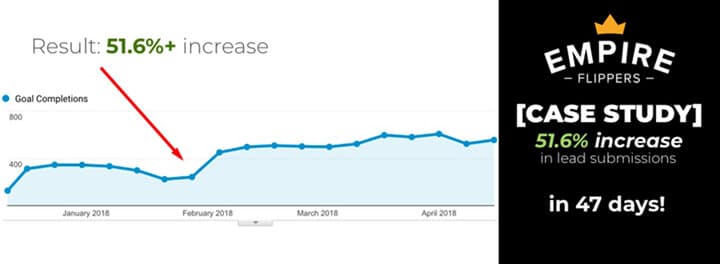
Empire Flippers case study: how Convertica rebuilt a valuation tool form as a step-by-step flow, split-URL tested it and lifted conversions 51.6% in 47 days.
JustThrive case study: two sequential split tests on a supplement store's product page raised revenue 101.82% cumulatively, 7 December to 24 March.
More in this topic
CRO case studies from Convertica: 24 client tests across lead generation, eCommerce, affiliate and membership sites, each result with its metric and source.
Plan and read your own tests with Convertica's free calculators, each with its formula and a worked example: the A/B test sample size calculator, the statistical significance calculator, the conversion rate calculator, and for paid media the ROAS calculator and the cost per acquisition calculator. See all free calculators.
Founder Kurt Philip leads the Convertica CRO blog with Convertica's CRO team, and guides carry his byline. Kurt has worked in SEO since the early 2000s and founded Convertica in 2017. Case studies report real Convertica tests.
In marketing, CRO means conversion rate optimization: improving a website so that a larger share of its visitors take the action that matters, such as buying, booking or signing up. It works through research and testing rather than more traffic. Outside marketing, the same letters can mean contract research organization or Chief Revenue Officer.
Convertica no longer publishes monthly round-ups of other people's articles. The old round-up pages are retired and their links now land on this page. The guides listed here replace them, and they are updated instead of being republished.
Start with the conversion rate optimization guide, which explains what CRO is and the process step by step. Then use the CRO checklist to review your own pages, and the free CRO audit for a score out of 100 and three fixes you can make now.
Yes. A number appears only when it comes from primary research that Convertica has opened, linked with its year, or from a published Convertica case study with its metric, timeframe and source. Numbers that cannot be traced to the original study are left out.

Ask Convertica
Convertica
Hi, I'm Convertica's AI assistant. Ask me anything about the free CRO audit, the full report, the one page and full site rebuilds, or any of the free tools.