Case study
Free shipping badge case study: promoting free shipping beside the price
This free shipping badge case study tested one idea on an eCommerce store's product pages: make the free shipping offer impossible to miss by placing a badge right next to the price. On desktop, the rate of order completion rose 27% and revenue per visitor 60.3%, with gains at every funnel stage. On mobile, nothing changed significantly.
Free shipping badge case study at a glance
| Client | An eCommerce store (not named in the original case study) |
|---|---|
| Vertical | eCommerce |
| Page tested | Product pages |
| Change tested | A "Free Shipping Included" badge next to the product price |
| Test | A/B test on desktop and mobile; test length and confidence level not published |
| Outcome | Rolled out on desktop; mobile needs a different approach |
| Rate of order completion | +27% |
|---|---|
| Revenue per visitor | +60.3% |
| Funnel stages | Increases at every stage |
| Mobile | No significant change |
Source: the original Convertica case study. The test length is not published, so these figures carry no timeframe.
What is a free shipping badge?
A free shipping badge is a small label on a product page, usually with a truck icon, that tells shoppers the price already includes shipping. Its job is to answer the question "what will delivery cost me?" at the moment a shopper is weighing the price, rather than leaving the answer for the cart or checkout.
What was the problem?
The store offered free shipping, but its product pages did not make the most of it. A promotion only influences a decision if the shopper sees it while deciding, and on a product page that moment is when the eye reaches the price. The goal was to improve the conversion rate and revenue per visitor by highlighting the free shipping offer more prominently on the product pages.
What was the hypothesis?
The hypothesis was that a badge stating "Free Shipping Included", placed directly beside the product price, would make the offer noticed at the right moment and lead more visitors to buy. The test also set out to compare how desktop and mobile shoppers responded, since the same badge takes up a different share of the screen on each.
What changed on the product page?
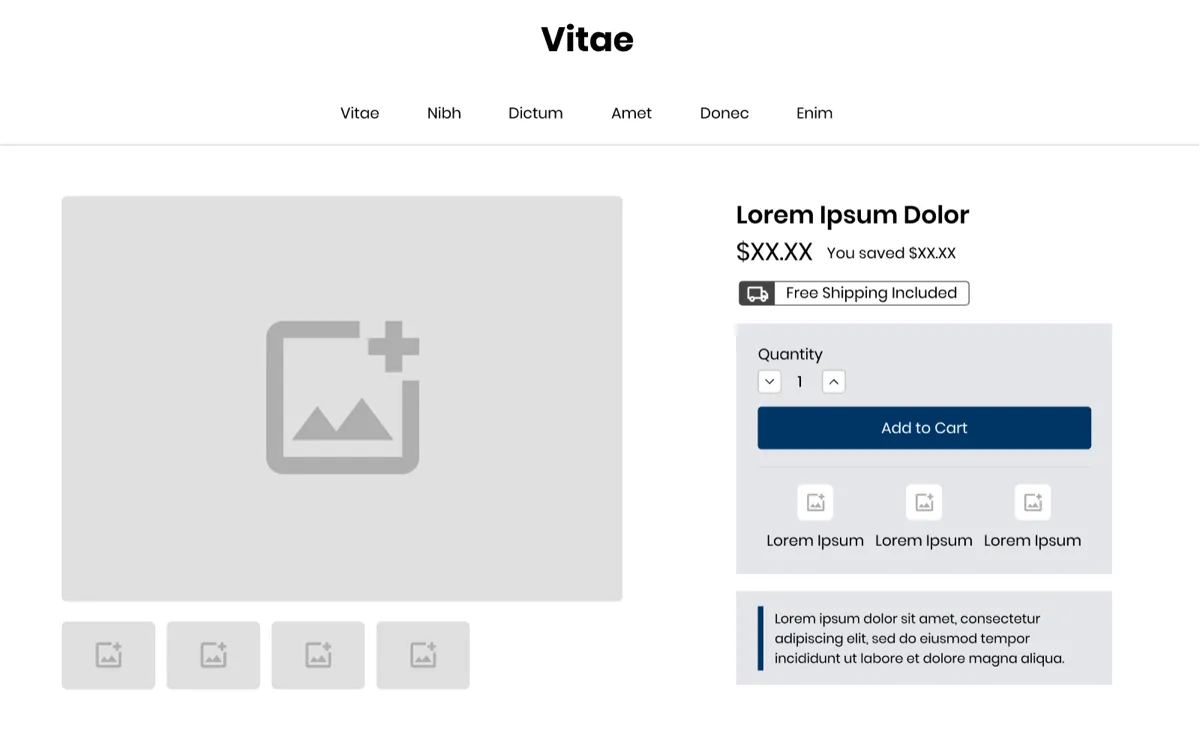
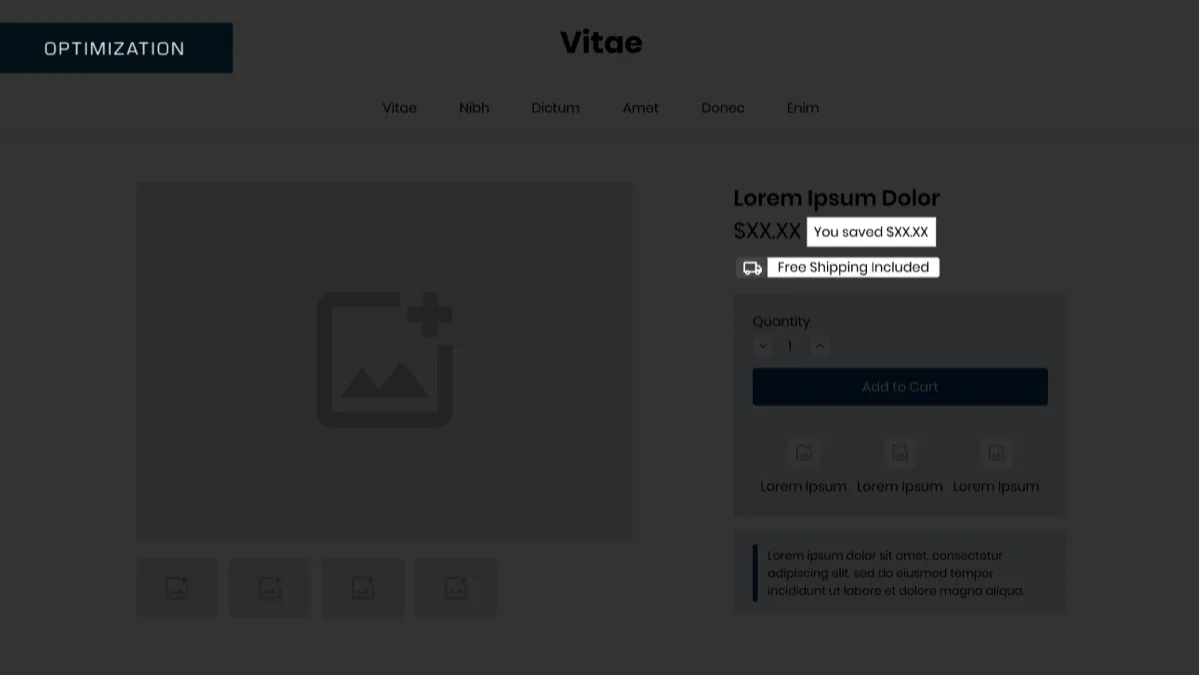
The variation added a "Free Shipping Included" badge, with a delivery truck icon, directly under the product price and above the quantity selector and the Add to Cart button. Nothing else in the buying area was described as changed in the original write-up.
The highlighted mockup in the original case study also marks a "You saved" line beside the price as part of the change. The write-up does not discuss it, so this page treats the badge as the main change and notes that the savings line may have contributed.
How was the free shipping badge tested?
The badge was A/B tested against the original product pages on desktop and mobile, with the results compared by device. The key metrics were the conversion rate (orders per visitor) and revenue per visitor, and the team also tracked each funnel stage: cart page visits, progress through checkout and completed purchases. The original case study does not state the test length or a confidence level.
| Device | Rate of order completion | Revenue per visitor | Funnel stages | Decision |
|---|---|---|---|---|
| Desktop | +27% | +60.3% | Increases at every stage | Rolled out |
| Mobile | No significant change | No significant change | Not reported | Further investigation |
| Whole store, desktop rollout only (projection) | +6.6% | +14.4% | Not applicable | Not applicable |
What were the free shipping badge results?
On desktop, the free shipping badge raised the rate of order completion by 27% and revenue per visitor by 60.3%, and increases showed up at every funnel stage, from cart visits to completed purchases. On mobile, neither metric changed significantly. Convertica recommended rolling the badge out on desktop.
The original case study also projects the effect across the whole store: assuming mobile performance stayed the same, a desktop-only rollout was projected to raise the rate of order completion 6.6% and revenue per visitor 14.4%. That projection is smaller than the desktop result because mobile visitors, who do not see the change, are included.
Why did revenue per visitor rise more than orders?
Revenue per visitor is the conversion rate multiplied by the average revenue per order. On desktop, revenue per visitor rose 60.3% and order completion 27%, so the arithmetic implies that desktop orders were larger on average in the variation (1.603 divided by 1.27 is about 1.26). One reading is that shipping included in the price made higher-priced items or larger quantities feel safer to buy. The original case study does not report order value, so treat this as an inference.
Why did the badge work on desktop but not on mobile?
The original case study does not explain the difference. It concludes that the lack of impact on mobile calls for further investigation or a different approach for mobile users. A plausible factor is layout: on desktop the badge sits in a compact buying area that the eye takes in at once, while on a phone the price, badge and button are spread down the screen. The same pattern appears in the free shipping threshold case study, which also helped on desktop and not on mobile.
How to promote free shipping on product pages
If you offer free shipping, say so where shoppers judge the price. A short badge beside the price, with a clear icon and plain words, is a simple change to build and to test. Measure it by device, on orders and revenue per visitor, and design the mobile version as its own test.
- Put the offer next to the price. That is where shoppers weigh the cost. Here the badge sat directly under the price.
- Use plain words. "Free Shipping Included" leaves nothing to interpret.
- Make it true everywhere. If free shipping has limits, such as regions or a minimum order, say so; a badge that the checkout contradicts costs trust.
- Track the whole funnel. Cart visits, checkout progress and purchases show where the badge helps.
- Separate desktop and mobile. Two free shipping tests in this series helped on desktop only.
- Project the store-wide effect honestly. A desktop-only win is smaller across all traffic, as the 6.6% and 14.4% projection shows.
The A/B test sample size calculator shows how much traffic a test needs, and the statistical significance calculator checks the result. For another test that moved shipping information onto the product page, read the Factory to Home case study.
Can AI shopping agents see that shipping is free?
Only if it is stated in text they can read. A badge that is an image, with no text alternative, tells an AI agent nothing, and an agent comparing stores for a buyer will weigh the delivered price. Write the free shipping offer as text beside the price, repeat its terms in your shipping policy, and include shipping costs in your product feed and structured data. Agent readiness is one of the eight checks in Convertica's free CRO audit.
Free shipping badge case study FAQ
What is a free shipping badge?
A free shipping badge is a small label on a product page, usually with a truck icon, that tells shoppers the price includes shipping. Placed beside the price, it answers the question of extra delivery cost at the moment the shopper is weighing the price, instead of leaving it for the cart or checkout.
Does a free shipping badge increase conversions?
In this test it did on desktop. A "Free Shipping Included" badge beside the product price lifted the desktop rate of order completion 27% and revenue per visitor 60.3%, with increases at every funnel stage. Mobile showed no significant change. The test length and confidence level were not published.
Where should a free shipping badge go on a product page?
Next to the price. In this test the badge sat directly under the product price, above the quantity selector and the Add to Cart button, so shoppers saw that shipping was included at the same moment they read the price. A badge in the footer or on the home page does not do that job.
What do the 6.6% and 14.4% figures mean?
They are a projection, not a measured result. Assuming mobile performance stayed unchanged, rolling the badge out on desktop only was projected to raise the rate of order completion 6.6% and revenue per visitor 14.4% across the whole store. The desktop-only gains are larger because only desktop visitors see the change.
Why did the free shipping badge not work on mobile?
The original case study does not say, and suggests further investigation or a different approach for mobile users. Possible reasons include less screen space near the price on a phone and different shopping habits on mobile. The result is a reason to design and test a mobile version separately, not to assume one.
Is this the same test as the free shipping threshold case study?
No. The free shipping threshold case study tested a message showing whether the cart qualified for free shipping, or how much more it needed. This test promoted free shipping that was already included, with a badge beside the price. Both helped on desktop and made no significant difference on mobile.
Can Convertica run this kind of test on my store?
Convertica starts with the free CRO audit, an app that checks your page for people and for AI agents while you watch. After it, CRO advisory, led personally by founder Kurt Philip with Convertica's CRO team, then gives you ongoing direction on what to fix and what to test while your team builds the changes. Or, with full implementation, Convertica's team builds the fixes from your audit. Both are priced after your audit.