

Affiliate
10Beasts
The full story of Convertica's conversion work on a well-known affiliate site, which started after a talk at an SEO conference.
Affiliate CRO
Affiliate marketing conversion rates decide how much commission each visitor is worth. Convertica has optimized affiliate and review sites for years, and now offers a free CRO audit of your page, then a one page rebuild or a full site rebuild, where Convertica's team builds every fix the audit found.
Turn visitors and AI agents into customers. More than 2,000 clients since 2017.
Affiliate marketing conversion rates measure how often affiliate traffic turns into a commission. A publisher has two rates: the share of page visitors who click through to a merchant, and the share of those clicks that become orders on the merchant's site. Multiplied together, with commission added, they give earnings per visitor, which you compare against your own baseline.
Affiliate marketing conversion rates measure how often affiliate traffic turns into a commission. For a publisher there are really two rates: the share of page visitors who click through to a merchant, and the share of those clicks that become orders on the merchant's site. Multiplied together, and with commission added, they give earnings per visitor, the number that matters most. The first of those two rates is a click-through rate, and how to increase click through rate covers the levers that move it on your own pages.
This page is written for affiliate site owners and publishers: review sites, comparison sites and content sites that earn when a reader buys through a link. Convertica's past clients include Authority Hacker and Geniuslink, and it has published affiliate case studies and its own method for split testing affiliate pages. If you are a brand running an affiliate program, the conversion that matters to you happens on your product pages and checkout: see eCommerce conversion optimization.
Calculate affiliate conversion rates at three points: page visitors to merchant clicks (click-through rate), merchant clicks to orders (merchant conversion rate), and commission per page visitor (earnings per visitor). The first is mostly yours to change, the second mostly the merchant's, and the third tells you whether a change made money.
| Metric | Formula | Where the data lives | Who controls it |
|---|---|---|---|
| Click-through rate to merchant | Affiliate link clicks ÷ page visitors × 100 | Your analytics (outbound click events) | Mostly you: content, tables, buttons |
| Merchant conversion rate | Orders ÷ affiliate clicks × 100 | The affiliate network or program dashboard | Mostly the merchant, but which products you send people to matters |
| Earnings per click (EPC) | Commission ÷ affiliate clicks | Network dashboard | Shared |
| Earnings per visitor (EPV) | Commission ÷ page visitors | Analytics plus network data, matched by page | The result of everything above |
A review page gets 10,000 visitors in a month. 1,200 of them click an affiliate link, a click-through rate of 12%. The merchant reports 48 orders from those clicks, a merchant conversion rate of 4%. So 0.48% of page visitors became a sale. Divide the month's commission from that page by 10,000 and you have its earnings per visitor, the figure to compare before and after any change. To turn those rates into commission, the affiliate commission calculator starts from the same 1,200 clicks at 4% and adds an order value and a commission rate.
Track clicks per page with a unique tracking ID or sub-ID where the program allows it, so network sales can be matched to the page that sent them. The free conversion rate calculator does the division for you.
A good affiliate conversion rate is one that beats your own baseline for the same kind of page and traffic. Rates vary by niche, merchant, price, cookie length and how close the reader is to buying, and published averages measure different things. Compare a buying guide with other buying guides on your site, over time, and judge changes on earnings per visitor.
Affiliate CRO is different because a publisher controls only half the funnel. The sale happens on a site you cannot change or put testing code on, the merchant reports it later and without saying which page or test version it came from, and a click is not money. That changes what you measure and how you test.
Affiliate conversion rate optimization starts with the page elements readers use to choose: the top picks box, the comparison table, the product sections and the buttons. Most lost commission comes from readers who cannot quickly see which product suits them, or who have to scroll back up to find the link once they have decided.
In two short videos from Convertica's YouTube channel, Kurt Philip explains why comparison tables should carry product images, and why readers should be able to choose a product before they leave for Amazon.
To split test an affiliate site, give each version its own page copy and its own affiliate tracking ID, send equal traffic to each, and judge the result on sales reported by the network, not on clicks. Convertica developed a "triple setup" for this, because a standard 50/50 test can leave Amazon sales impossible to match to test versions.
The problem, as Convertica explained in its post on why affiliate site split tests fail: JavaScript testing tools cannot sort some visitors (for example, those with JavaScript or cookies disabled, or on slow connections), so those visitors all see the original page. The original gets more than its share, and the sales data no longer lines up with the split.
One copy stays an exact duplicate and becomes the control. All changes go on the second copy, the variation.
Point each copy's canonical tag at the original page, so search engines treat the original as the page to rank.
A unique affiliate tracking ID per copy means the network reports the sales from the control and the variation separately.
Send 45% of traffic to the control copy, 45% to the variation and 10% to the original, as a split-URL test. Visitors the tool cannot sort land on the original, which is left out of the comparison.
Set the goal on clicks to the merchant's links, then compare sales and commission per visitor for the control and the variation from the network reports.
Sales are rare compared with visits, so tests take time. Set the sample size before launch with the A/B test sample size calculator and check the result with the statistical significance calculator.
A split test needs traffic. On a smaller site, fix the clear problems in the list above directly and save testing for your highest-earning pages.
Use this checklist on your top-earning review or comparison page. Each "no" is something to fix or test.
AI answers in search and in assistants now respond to many "best product for" questions directly, sometimes citing the review pages they drew on. For a publisher that means two jobs: earn the citation with clear picks, criteria and first-hand testing written as text, and convert the smaller number of readers who still click through, who tend to arrive closer to buying.
Agent readiness is one of the eight checks in Convertica's free CRO audit. For being found and cited in AI answers, see AI search visibility. This is a young field with little long-term data, and we say so.
Proof
Convertica has published several affiliate case studies, from split tests on Amazon affiliate review pages to a full write-up of its work on 10Beasts. The quotes below are verbatim from the homepage and Trustpilot.
Affiliate
The full story of Convertica's conversion work on a well-known affiliate site, which started after a talk at an SEO conference.
Affiliate
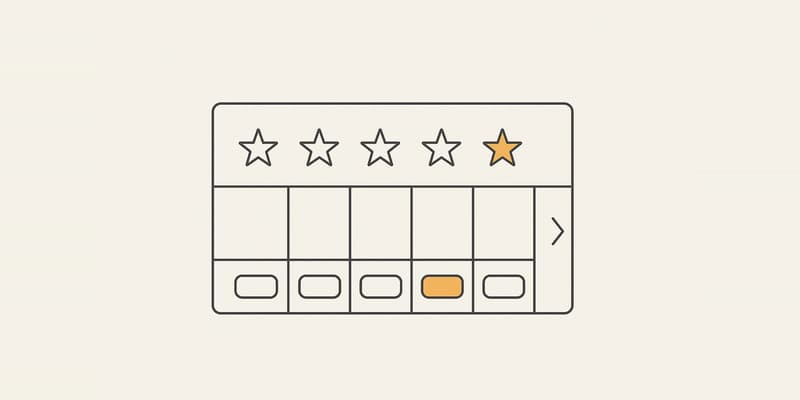
An Amazon affiliate site in the home heating and cooling niche: ratings above the comparison table buttons, and a button back to the table.

Affiliate
An Amazon affiliate review site: a vertical top 3 picks table tested against an at-a-glance list, where sales rose even though clicks did not.
Convertica increased revenue on our site by over 30%. Their stuff works.
I have used Convertica for a couple of affiliate sites and have been really impressed with the quality of work. Highly recommended for any affiliate looking to increase conversion rates.
I hired Convertica initially for three months and then for another three. Their team helped me optimize a number of top pages on my site and increase affiliate revenue.
For one article, they more than doubled earnings. They are experts at optimization and free me up to work on other areas of the business.
I'd highly recommend Convertica's services to any content creator, marketer or even a blogger who wants to get maximum value from existing traffic. I plan to work with them again.
Great results. easy to work with, and do proper split-testing. Even noticed when I accidentally made a change to a page they were testing, and they stopped the test and started again to make sure I didn't distort results. The most important thing to know: they had a positive result on revenue.
The offer
Many of the case studies above were split tests run by Convertica's team. Today the offer is a free CRO audit of your page, then a one page rebuild or a full site rebuild, where Convertica's team builds every fix the audit found.
An app with eight checks for people and AI agents, including calls to action, mobile, speed and agent readiness. Enter your website and watch it run live on your page.
Convertica's team builds every fix the audit found, on your site: the one page rebuild covers one page and the full site rebuild covers your whole site. Both are paid by card through Stripe Checkout, at the end of an audit report or straight from this site with no audit first: Convertica runs the audit after you order.
Good affiliate marketing conversion rates are ones that beat your own baseline for the same page type and traffic source. Rates vary widely by niche, merchant, price and traffic intent, and published averages use different definitions, so compare a page with its own history and with similar pages on your site.
Divide conversions by clicks or visitors, then multiply by 100, and say which one you used. Clicks to the merchant divided by page visitors is your click-through rate. Orders divided by those clicks is the merchant conversion rate. Commission earned divided by page visitors is earnings per visitor, the number that combines both.
Affiliate conversion rate optimization is the work of earning more commission from the visitors an affiliate site already has. It improves how review and comparison pages help readers choose and click through to the right merchant, and it judges every change by commission or sales per visitor rather than clicks.
Usually because the extra clicks came from readers who were less ready to buy, such as a louder button pulling people who had not chosen a product yet. Convertica has seen the reverse too: a change that left clicks flat raised sales, because readers were better informed before they clicked. Judge changes on sales.
Yes, but a standard 50/50 test can mislead, because Amazon reports sales by tracking ID, not by test variation, and visitors the testing tool cannot sort all see the original page. Convertica's triple setup gives the control and the variation their own page copies and their own tracking IDs.
Longer than most site owners expect. Sales are a small share of clicks, merchant reports can lag, and the test needs enough sales in each version to show a real difference. Set the sample size before the test starts, and do not stop it early because one version pulls ahead.
Convertica works with affiliate site owners and publishers, the sites that earn commission. Authority Hacker and Geniuslink are among its past clients. Brands that run their own affiliate program are better served by Convertica's eCommerce conversion work on product pages and checkout.
Yes. After the free CRO audit, the one page rebuild has Convertica's team build every fix the audit found on that page, and the full site rebuild covers your whole site. Or you, your developer or your virtual assistant builds the changes from the audit.

Ask Convertica
Convertica
Hi, I'm Convertica's AI assistant. Ask me anything about the free CRO audit, the one page and full site rebuilds, or any of the free tools.